
Earth Prize Success: Our Students Explore DNA as the Data Storage of the Future
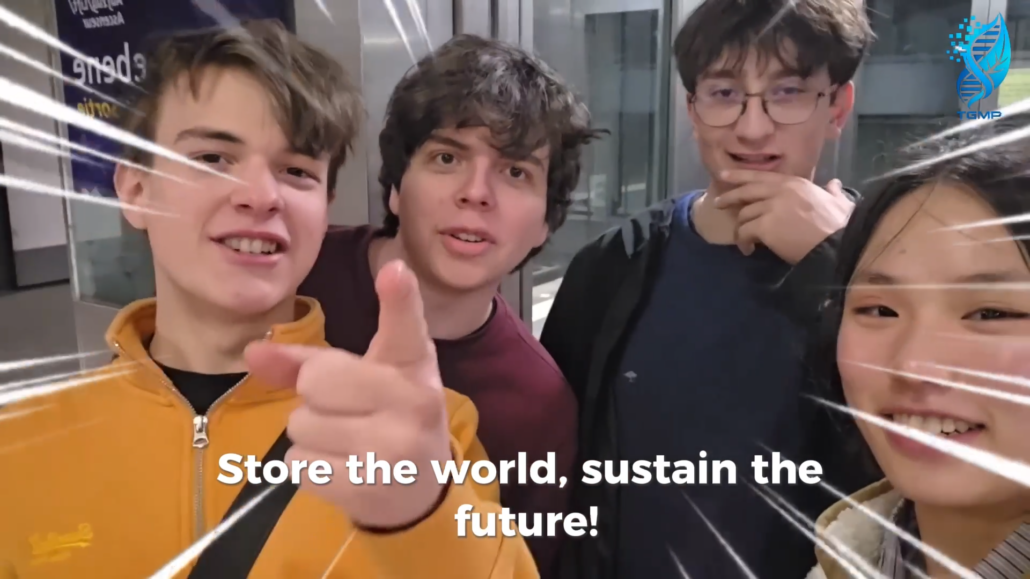
Four of our Grade 12 students have been named Earth Prize Scholars and placed among the Top 5 teams in the Europe-UK region with their research on synthetic DNA data storage.
The amount of digital data the world produces is growing faster than ever, and so is the energy and space needed to store it. Can synthetic DNA be part of the solution? This is the question our Grade 12 students Neif, Yewon, Illia and Stefan set out to answer.
Under the mentorship of our science teacher Ms. Soniya Jadhav, the team explored how synthetic DNA could be used to store massive amounts of digital data in a sustainable way. True to our school’s teaching philosophy, they combined smart AI tools with the academic principles of the sciences to tackle a real-world challenge.
Their inquiry went far beyond online research. The students took the initiative to contact researchers working in this field directly, including professors from ETH Zurich and Imperial College London, who helped them work through their toughest questions.
All of this happened alongside the demands of the IB Diploma Programme. The students’ work earned them international recognition: they were named Earth Prize Scholars and placed among the Top 5 teams in the Europe-UK region of The Earth Prize, awarded by The Earth Foundation in Geneva, Switzerland.
What is The Earth Prize?
The Earth Prize is the world’s largest environmental sustainability competition for students aged 13 to 19. It is run by The Earth Foundation, a non-profit organisation based in Geneva, Switzerland, and invites teams of young people from around the world to develop ideas that drive positive change for the environment.
Every submission is independently reviewed by a panel of experts, and only the strongest teams worldwide are named Earth Prize Scholars. Learn more at theearthprize.org
Watch the Students’ Video
As part of their submission, the team created a video presenting their project, made entirely by the students themselves.
We congratulate Neif, Yewon, Illia and Stefan on this outstanding achievement and thank Ms. Jadhav for her guidance. We’re proud to see our students taking classroom learning straight to the frontiers of science.
